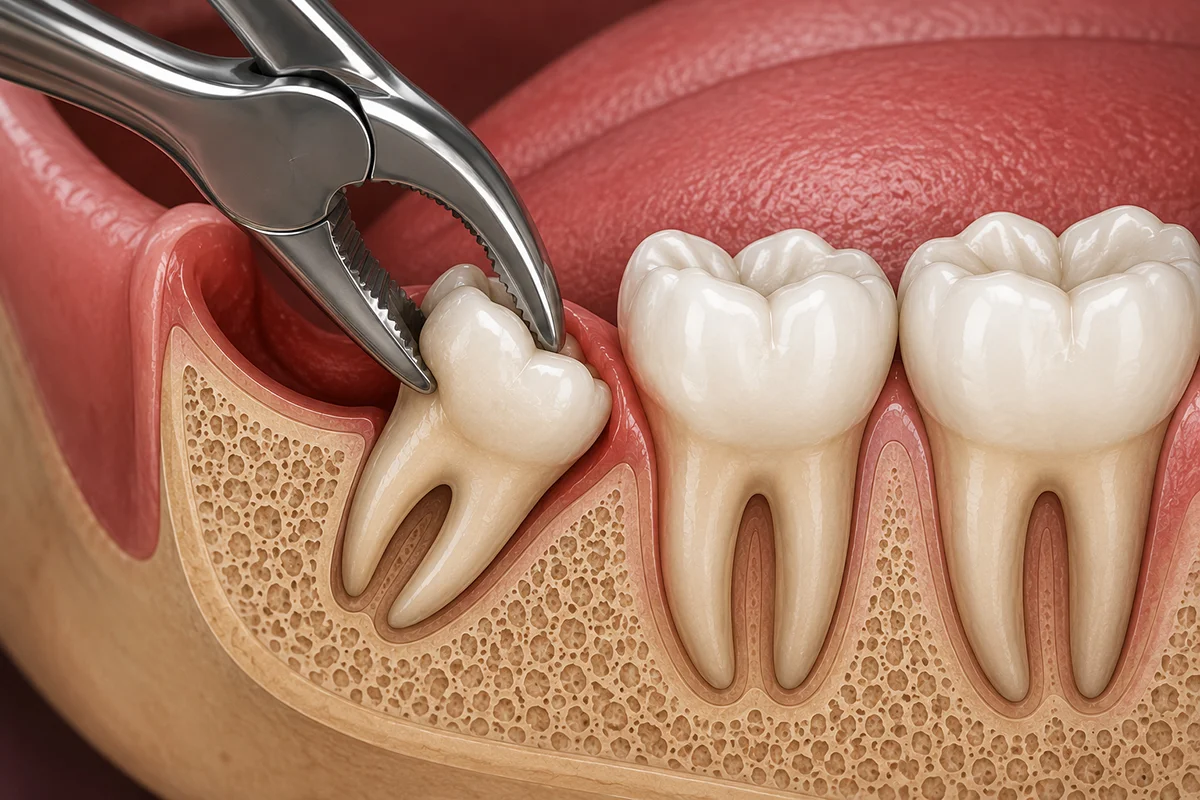
Wisdom tooth extraction is a common dental procedure used to remove third molars that may cause pain, infection, crowding, gum problems, or other oral health concerns. Wisdom teeth often develop during the late teenage or early adult years and may not have enough space to grow properly, sometimes becoming impacted or partially erupted.
Our approach to wisdom tooth removal focuses on accurate diagnosis, careful treatment planning, and patient comfort. After evaluating the position and condition of the wisdom tooth, we determine the most appropriate treatment approach. Whether the tooth is fully erupted or impacted, our goal is to provide safe and precise care while supporting a smooth recovery.
Frequently Asked Questions
Wisdom teeth are the third set of molars located at the back of the mouth. They typically develop during the late teenage or early adult years and may cause problems if there is not enough space for them to grow properly.
Wisdom tooth removal may be recommended when the tooth causes recurring pain, infection, swelling, gum problems, decay, damage to nearby teeth, or other oral health concerns. An impacted or improperly positioned wisdom tooth may also require removal based on your dental evaluation.
Wisdom tooth extraction is performed under appropriate local anesthesia to keep you comfortable during the procedure. Some soreness, swelling, or jaw stiffness may occur afterward, depending on the complexity of the extraction, and your dentist will provide suitable aftercare instructions.
The duration of wisdom tooth extraction depends on the tooth's position, whether it is impacted, and the complexity of the procedure. A straightforward extraction may be relatively quick, while surgical removal of an impacted wisdom tooth may require more time.
After extraction, follow your dentist's instructions carefully. This may include keeping the extraction area clean, avoiding strenuous activity for the recommended period, choosing suitable foods, and taking prescribed or recommended medications as directed. Contact your dentist if you experience unusual or worsening symptoms during recovery.